Table Of Content
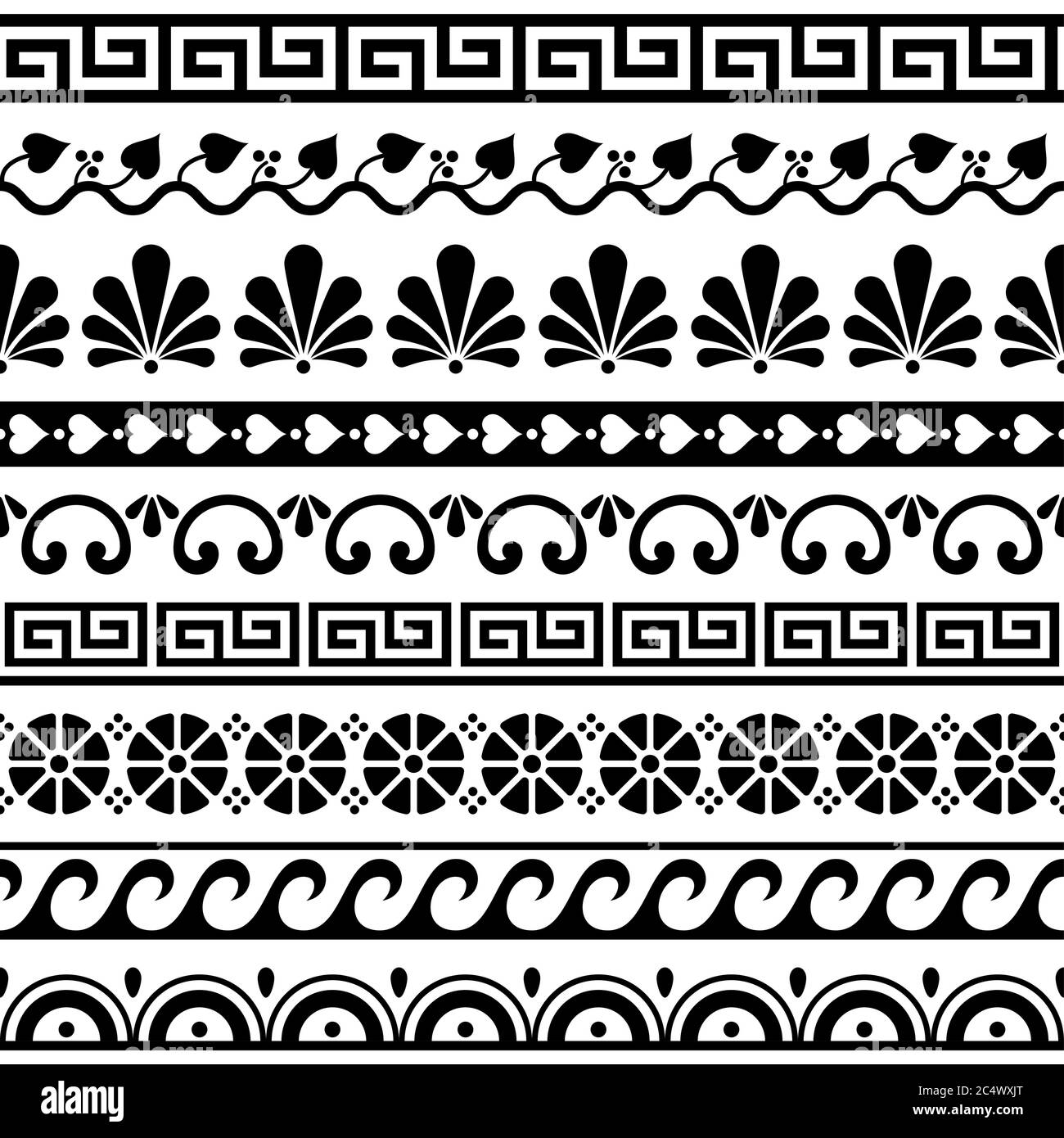
Greeks used it as a decorative element in pottery, jewelry, and architecture. The Greek Key, also known as the meander or fret pattern, consists of a continuous line that twists and turns, creating an interlocking geometric motif. Its origins can be traced back to ancient Greek architecture, where it adorned the friezes, borders, and pottery of prominent structures. The Greek Key pattern is a classic decorative element that originated in ancient Greece. The geometric continuous form of the Greek Key design works well on trims and edging.
An ERASED GENERATION: Greek Heritage SOciety Presents THE EFTYCHIA PRoject
This is really effective when used around doorways and windows, as it highlights these elements and adds a touch of elegance. This continuous line that twists and turns visualises the eternal flow of life. Its iconic design also holds a deeper meaning, symbolizing the everlasting bond between two people. It is no wonder that Greek Key has become a favored choice for wedding rings and romantic gifts.
As a motif, the Greek Key falls into the larger category of fretwork.
Greek Key Decorative Pillows Discount atlantaprogressivenews.com - Atlanta Progressive News
Greek Key Decorative Pillows Discount atlantaprogressivenews.com.
Posted: Thu, 25 Apr 2024 18:19:35 GMT [source]
The design consists of a series of interlocking lines that create a continuous and endless motif. Its interlocking geometric pattern reflects the belief in the interconnectedness of all things and the continuous cycle of life, representing an eternal path or journey. A Greek Key trim on curtain panels adds depth and distinction to your window treatments. San Francisco-based Briana Nix used the Phillip Jeffries wallpaper “It’s Greek to Me” in a powder room she designed, giving the room serious architectural interest and graphic punch.

The Complex Greek Meander
The Greek Heritage Society of Southern California presents Eftychia/Linda Carol Trotter, founder of the Eftychia Project. Linda tells her personal heart- wrenching story of how she was born in Greece and adopted in the US under a series of unusual circumstances. Years later, after life-changing event in her life, she was able to amazingly find her birth mother, who she had been told had died in childbirth.
Here, PhD student David R. Richardson gives a brief overview of several of Wright’s most notable projects in the Grand Canyon state. And then I measured from the bottom hem to the top of the panel, marked my finished length (my finished length is 89 inches on these draperies), and folded, pinned, and ironed the crease in place. Rugs bordered in the Greek Key design give the room a solid foundation from which to build your decorating scheme. Upholstery with an allover Greek Key pattern makes a modern statement. This pattern can be mixed with floral prints for a more traditional look.
Greek Key Border Pattern Generator
And then I added the inner twill tape along the edge of the painters tape, creating a Greek key design in the top and bottom corners of the leading edge of the drapery panel. Incorporating the greek key design into your home decor, wardrobe, or architectural design will add a touch of timeless elegance to any space. The greek key motif is a popular decorative element that has been used in a variety of ways. Whether used as a fashion statement or architectural motif, the greek key symbol will continue to be admired and appreciated for years to come. In greek mythology, the symbol represents the labyrinth of king minos, which symbolizes life’s journey. The greek key symbol and the meander pattern are often used interchangeably, but it is crucial to understand that the meander is a larger design of which the greek key is a part.
Understanding its significance is important for anyone who appreciates the beauty of the greek key symbol. In china, the symbol represents the flow of energy through the universe, while in native american cultures, it signifies the border between life and death. Though it is referred to as a Greek Key, this distinct meander pattern is found in decorative designs worldwide. Artists and artisans outside of Greece were using it long before the Ancient Greeks. Many early civilizations around the world, who weren’t communicating with each other, used similar patterns. The Greeks, however, really embraced it and started using it everywhere.
The origins of the Greek key pattern - The Washington Post
The origins of the Greek key pattern.
Posted: Wed, 28 Mar 2018 07:00:00 GMT [source]
Is it a Mistake To Decorate With A Greek Key Motif?

The meander symbol can also be traced back to many early civilizations, including Mayan, Etruscan, Egyptian, Byzantine, and ancient Chinese. It was a favorite decorative motif during and after the 4th dynasty in Egypt, decorating the temples and tombs. Archaeologists have also discovered it on Mayan carvings and ancient Chinese sculptures. The meander has an undeniable power to elevate any outfit with its boldness and touch of sophistication. This timeless pattern effortlessly adds a sense of elegance to watches, jewelry, and handbags.
Its impressive design and cultural significance make it a fascinating element of ancient greek history. Inspired by these forms, designers began to incorporate these elements from architecture into textile designs. During this time, the Greek Key became one of the most versatile and widely used patterns. The Greek Key is a common motif in textile design and many other places where decorative elements are necessary. Whether or not you know the name, you have most likely seen a Greek Key design.
Versatile, classic and stylish, the Greek Key pattern is an element that works well in many areas of your home. Consider using this universally pleasing design in your own home for a distinct style statement. Furniture, such as end tables, designed in the shape of the Greek Key design add interest to modern interiors. “The Greek key adds refinement as a design element with its balanced, crisp geometry,” says Perino. “The use of a Greek key motif creates a classical vibe, but when applied in unconventional ways, it can be quite modern,” says Patrick Dragonette, of Dragonette Limited.
Not yet halfway to seeing how pervasive the fret pattern is, we must jump back and forth in cultures—and also hop continents. It stuns in at least one pyramid with a weight-bearing fret pattern made from stone so well-notched it needed no mortar. We don’t know what the ancient Ukraine community called this pattern (if anything), and it’s impossible to trace it directly from the paleolithic period straight to now (because relics have a way of going unpreserved). Greek culture used the Meander prolifically in much of their art and architecture for thousands of years. After it appeared there, we can trace the motif directly to Rome, then to Europe at large. During 18th century Europe, along with the rejuvenated enthusiasm for all things Greek; came the Greek Key symbol, a sign of Greek style and taste; a sophisticated, decorative pattern which adorned just about anything.
To some, it was a symbol of waves and the eternal flow of life, or a good harvest. This maze-like, snake-like, boxy meander always has something meaningful to say to someone. Some historians believe that the meander symbol has a strong association with the labyrinth as it can be created with the Greek key pattern.




No comments:
Post a Comment